How Can a Fully Automatic Strapping Machine Improve Packaging Efficiency?
In today’s competitive manufacturing and packaging industry, businesses constantly look for ways to boost productivity, reduce manual labour, and ensure secure product packaging. A fully automatic strapping machine is an effective solution for companies seeking to streamline packaging operations and achieve consistent strapping results.
From manufacturing plants and warehouses to logistics centres and distribution facilities, automatic strapping machines help secure cartons, boxes, bundles, and palletised goods with minimal manual intervention. These machines automate key strapping operations, helping businesses improve packaging speed, maintain consistent strap tension, and prepare products for safe transportation.
Roxxs Packaging LLP supports businesses exploring packaging machinery for industrial applications. Understanding how a fully automatic strapping machine works, its benefits, and its applications can help manufacturers select equipment that meets their production requirements.
What Is a Fully Automatic Strapping Machine?
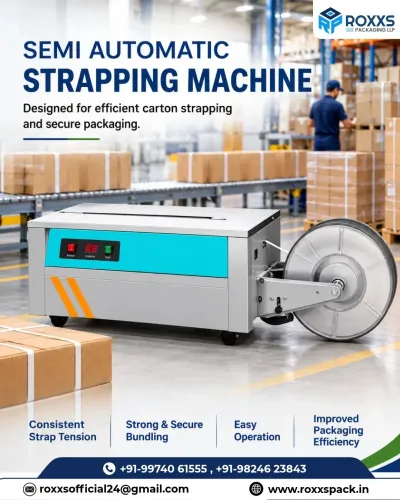
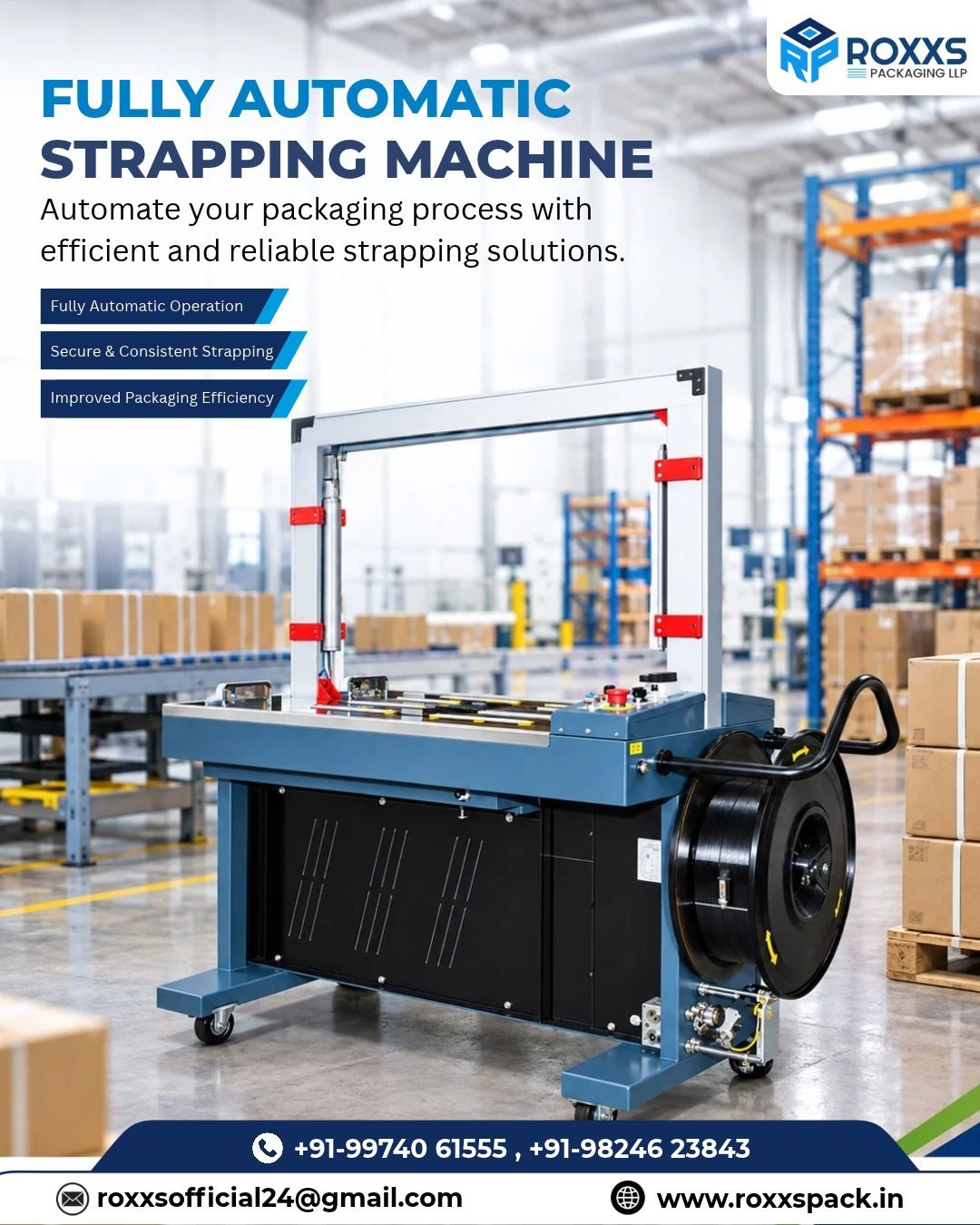
A fully automatic strapping machine is an industrial packaging system that automatically applies straps around packages or products. Depending on the model and production-line configuration, it can feed, tension, seal, and cut strapping material with little or no manual intervention during normal operation.
These machines commonly use polypropylene (PP) or polyester (PET) strapping to secure products for storage, handling, and shipping.
Unlike manual strapping tools and semi-automatic strapping machines, a fully automatic system can be integrated into a conveyor-based packaging line. This makes it suitable for businesses that handle high package volumes and require reliable, repeatable packaging performance.
1. How Does a Fully Automatic Strapping Machine Improve Packaging Speed?
Packaging speed is a key factor in overall production efficiency. Manual strapping requires operators to position straps, tighten them, secure the joints, and cut the material. Repeating these steps for hundreds or thousands of packages can consume considerable time.
A fully automatic strapping machine automates these repetitive tasks, strapping packages efficiently and consistently.
Key advantages include:
* Automatic strap feeding and positioning.
* Faster strapping cycles for suitable package sizes.
* Reduced manual handling between packaging stages.
* Integration with conveyors and production lines.
* More consistent packaging throughput during repetitive operations.
Actual speed depends on package dimensions, strap specifications, machine settings, and overall production line configuration.
2. Reduces Manual Labour and Operating Costs
Manual packaging requires operators to repeat tasks throughout the day. This can increase labour requirements and contribute to fatigue during high-volume production.
An automatic packaging machine reduces the need for manual intervention during routine strapping operations. Operators can focus on monitoring equipment, inspecting package quality, and managing other production activities.
Potential benefits include:
* Reduced repetitive manual work.
* Better allocation of production staff.
* More consistent packaging procedures.
* Improved workflow coordination.
* Potential long-term savings in packaging labour costs.
Actual cost savings depend on production volume, staffing arrangements, machine utilisation, and maintenance expenses.
3. Ensures Consistent Strap Tension and Package Security
Proper strap tension keeps products secure during handling, storage, and transportation. Loose straps can let packages shift, while excessive tension can damage cartons or the products inside.
A fully automatic strapping machine applies tension according to its settings and operating capabilities. This helps improve consistency across packages and reduces variation associated with manual strapping.
For businesses transporting products over long distances, consistent strapping can improve load stability when paired with appropriate packaging materials and handling practices.
4. Minimises Packaging Errors and Material Waste
Inconsistent manual operations can lead to mispositioned straps, poor seals, unnecessary strap use, and damaged packaging.
An automatic strapping system helps standardise the strapping process by controlling strap feeding, tensioning, sealing, and cutting.
How it can improve material utilisation:
* Repeatable strap application.
* Consistent sealing operations.
* Fewer errors from repetitive manual handling.
* Better control over strap tension.
* Fewer packaging defects when the machine is properly adjusted and maintained.
Selecting the right strap width, material, and tension settings is essential to avoid unnecessary waste and maintain package integrity.
5. Improves Production Line Efficiency
In high-volume manufacturing environments, packaging is often the final stage before products move to storage or dispatch. Slow packaging operations can create bottlenecks and delay shipments.
A fully automatic strapping machine can be integrated with compatible conveyors, sensors, and other packaging equipment to support a continuous workflow.
This can help businesses:
* Reduce waiting time between packaging stages.
* Maintain a more predictable production flow.
* Coordinate packaging with upstream machinery.
* Improve the handling of repetitive packaging jobs.
* Prepare finished goods for dispatch more efficiently.
Successful integration requires appropriate conveyor speeds, package spacing, machine capacity, and safety controls.
6. Suitable Applications Across Multiple Industries
Fully automatic strapping machines are used in industries that require secure and repeatable package bundling.
Manufacturing Industry
Manufacturers use strapping systems to secure cartons, components, and finished products before storage or shipment.
E-Commerce and Logistics
Distribution centres use automatic strapping equipment to prepare packages for sorting, handling, and dispatch.
Food and Beverage Packaging
Suitable machines can secure cartons and multipacks of packaged food and beverages, depending on the packaging configuration and hygiene requirements.
Paper and Printing Industry
Strapping machines can secure paper bundles, printed materials, and cartons for easier handling and transportation.
Textile Industry
They can bundle suitable textile packages, cartons, and finished goods before dispatch.
Construction and Building Materials
Compatible equipment can strap bundles of packaged building materials and other products that require stable unit loads.
The appropriate machine depends on package dimensions, product weight, strap type, required throughput, and environmental conditions.
7. How to Choose the Right Industrial Strapping Machine in India
Choosing the right industrial strapping machine in India requires evaluating your production requirements, packaging materials, and operating environment.
Package Size and Shape
Check the minimum and maximum package dimensions the machine can handle. Consider whether you need to strap small cartons, large boxes, bundles, or palletised products.
Production Capacity
Determine the number of packages that must be strapped per hour or shift. Select equipment that can meet the required throughput without creating bottlenecks.
Strapping Material Compatibility
Confirm whether the machine supports PP or PET straps and verify the recommended strap width, thickness, and specifications.
Strap Tension and Sealing
Evaluate tension adjustment, sealing quality, and the machine’s ability to handle different package types without damaging the products.
Automation and Integration
Determine whether a standalone machine or a conveyor-integrated system best fits your production line.
Safety Features
Review emergency-stop controls, guarding, operating procedures, and maintenance access to support safe equipment use.
Maintenance and After-Sales Support
Consider spare-part availability, servicing requirements, technical assistance, warranty coverage, and installation support.
Total Cost of Ownership
Compare the initial investment with labour requirements, strap consumption, energy use, maintenance expenses, and expected machine utilisation.
8. Why Consider Roxxs Packaging LLP?
Businesses looking for reliable packaging equipment should evaluate machinery based on application requirements, operating efficiency, compatibility, and long-term service support.
Roxxs Packaging LLP is a point of contact for businesses exploring industrial packaging machinery. Before selecting a fully automatic strapping machine, discuss your package dimensions, production volume, strap specifications, and desired automation level with the supplier.
For businesses researching packaging machinery in India, request technical specifications, operating demonstrations (where available), installation details, warranty terms, and maintenance information.
Companies exploring packaging solutions in the Gulf should also consider shipping arrangements, electrical compatibility, local compliance requirements, and after-sales support.
Similarly, buyers searching for a strapping machine in Oman should confirm that the selected model meets their packaging requirements and that installation and maintenance support are available for their location.
Selecting machinery based on verified specifications helps businesses make informed investment decisions.
Frequently Asked Questions (FAQs)
1. What is a fully automatic strapping machine used for?
A fully automatic strapping machine secures cartons, boxes, bundles, and other compatible packages with plastic strapping. It automates strap feeding, tensioning, sealing, and cutting.
2. How does an automatic packaging machine improve efficiency?
An automatic packaging machine reduces repetitive manual tasks, standardises packaging operations, and can increase throughput. The level of improvement depends on the equipment’s capacity, production volume, and integration with the packaging line.
3. Which strapping material is used in fully automatic strapping machines?
Common materials include polypropylene (PP) and polyester (PET) straps. The appropriate option depends on package weight, required holding strength, machine compatibility, and transportation conditions.
Keywords