Semi-Automatic Strapping Machine: Benefits, Working Principle & Applications
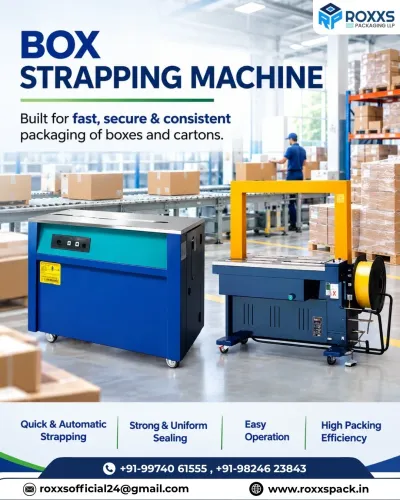
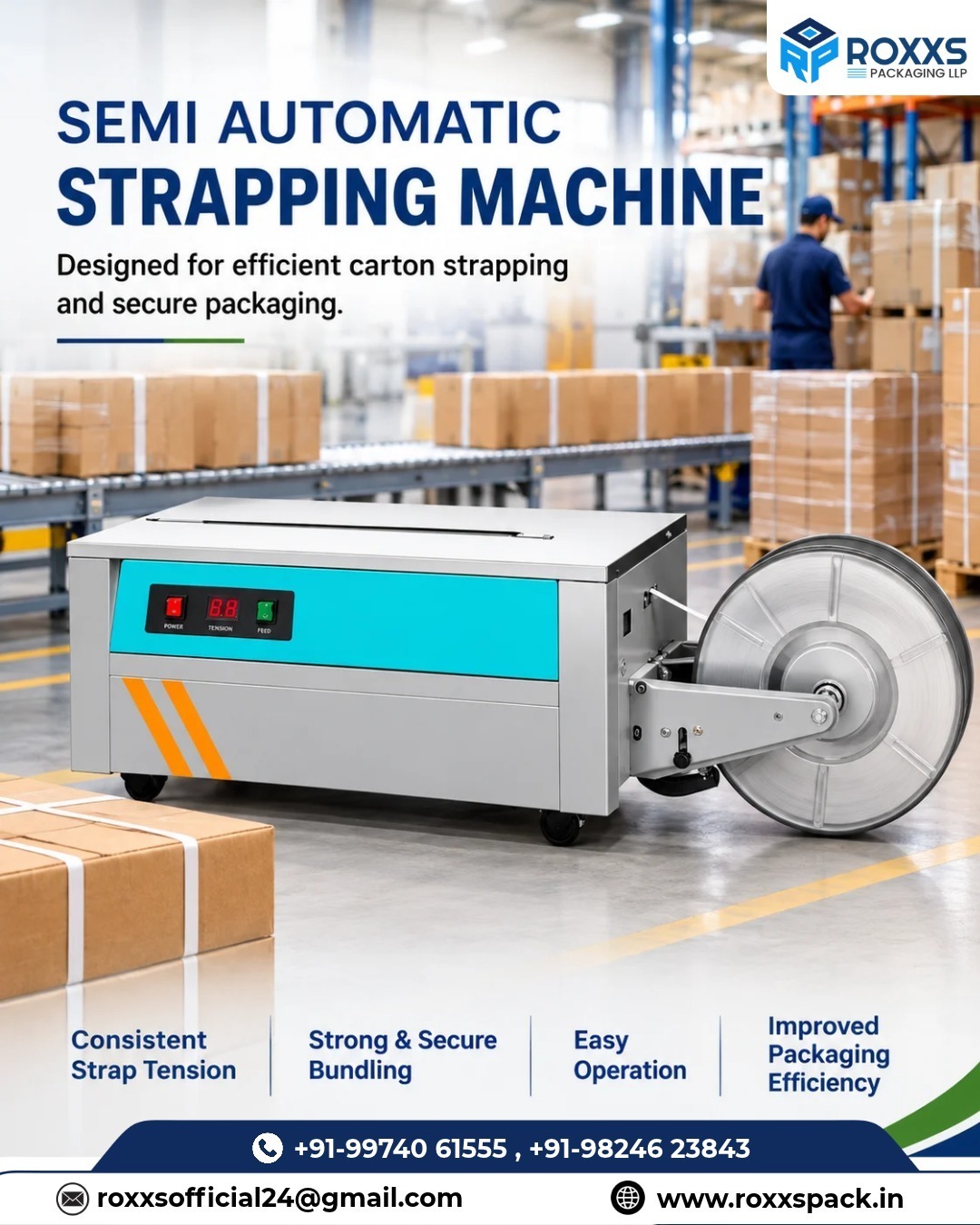
A Semi-Automatic Strapping Machine is an efficient packaging solution that secures cartons, boxes, bundles, and other packages with plastic strapping. It automates key strapping operations, including tensioning, Sealing, and cutting, while operators manually position packages.
Roxxs Packaging LLP offers packaging solutions that improve productivity, maintain consistent strap tension, and simplify daily packing operations. A suitable semi-automatic strapping machine can help warehouses, manufacturing units, distribution centres, and e-commerce businesses secure packages for storage and transport.
Whether you need a Carton Strapping Machine for shipping boxes or reliable Box Strapping Equipment for your packaging station, understanding the machine's working principle, features, benefits, and selection criteria will help you choose the right solution.
What Is a Semi-Automatic Strapping Machine?
A Semi-Automatic Strapping Machine is a packaging machine that uses plastic straps to secure packages and bundles. The operator typically positions the package, loops or feeds the strap into the machine, and initiates the strapping cycle. The machine then tensions the strap, joins its ends, and cuts the excess material.
Many models use polypropylene (PP) strapping, although compatibility depends on the machine's specifications.
Unlike fully automatic systems, which may incorporate automatic package conveying and strapping within a production line, semi-automatic machines require operator involvement in package handling. This makes them a practical choice for businesses that need improved packaging efficiency without fully automating their operations.
Common applications include:
- Cartons and shipping boxes.
- Printed materials and paper products.
- Industrial components and finished goods.
- Compatible textile bundles and packaged products.
- E-commerce orders and warehouse shipments.
How Does a Semi-Automatic Strapping Machine Work?
A Semi-Automatic Strapping Machine follows a straightforward process to secure packages.
1. Package Positioning
The operator places the carton, box, or bundle on the machine's worktable and positions it for strapping.
2. Strap Feeding
The operator loops the strap around the package and feeds the strap end into the machine's designated slot or mechanism.
3. Automatic Strap Tensioning
The machine pulls the strap tight around the package. Depending on the model, you can adjust tension settings to suit different package requirements.
4. Strap Sealing
The machine joins the strap ends using its built-in sealing mechanism, typically a heat-sealing system compatible with the strapping material.
5. Strap Cutting
After joining the strap ends, the machine cuts the excess strap and prepares for the next cycle.
6. Package Removal
The operator removes the secured package and positions the next item.
This combination of manual positioning and automated strapping simplifies repetitive packaging tasks and maintains more consistent results.
Key Features of a Semi-Automatic Strapping Machine
A well-selected semi-automatic strapping machine offers practical features for everyday packaging operations.
- Automatic Tensioning: Helps apply consistent strap tension within the machine's operating range.
- Automatic Sealing and Cutting: Completes key stages of the strapping cycle with reduced manual effort.
- Adjustable Tension: Lets you adapt settings to compatible packages and strapping materials.
- Compact Workstation Design: Many models fit conveniently into warehouses, dispatch areas, and packing stations.
- Simple Operation: Supports routine packaging activities with appropriate operator training.
- PP Strap Compatibility: Many models accommodate polypropylene strapping within specified width and thickness limits.
- Consistent Strap Joints: Proper setup and maintenance help achieve reliable sealing performance.
- Flexible Package Handling: Suitable for different package sizes within the machine's specified limits.
Actual features, dimensions, strap compatibility, and operating capacity vary by model. Always verify the manufacturer's specifications before purchasing.
Benefits of Using a Semi-Automatic Strapping Machine
Investing in a suitable semi-automatic packaging machine can help businesses improve packaging workflow and manage day-to-day operations more efficiently.
1. Improved Packaging Productivity
Manual strapping can slow packaging operations when you need to secure large numbers of cartons or bundles. Automating tensioning, Sealing, and cutting helps operators complete repetitive tasks more efficiently.
2. Reduced Manual Effort
The machine handles several repetitive strapping steps, reducing manual work and letting employees focus on package preparation, inspection, and dispatch.
3. Consistent Strap Tension
Appropriate tension settings help secure packages more uniformly. This reduces variations from manual strapping and improves consistency in package handling.
4. Better Package Security
Properly applied strapping helps keep cartons and bundles together during handling, storage, and transportation. The correct strap tension and sealing quality are essential for reliable package security.
5. Efficient Use of Strapping Material
Proper machine settings can help reduce unnecessary strap use. Actual material savings depend on package dimensions, strap specifications, and operating practices.
6. Flexible Packaging Operations
Because packages are positioned manually, semi-automatic machines can accommodate different package sizes within their operating range without requiring a fully integrated conveyor system.
7. Practical Automation for Growing Businesses
A semi-automatic strapping machine offers a practical step toward packaging automation for small and medium-sized businesses that want improved consistency without the complexity of a fully automatic line.
Applications of Semi-Automatic Strapping Machines
A Semi-Automatic Strapping Machine is used across industries that need to secure cartons, bundles, and packaged products.
E-Commerce and Warehousing
Warehouses and online retailers use strapping machines to secure shipping cartons and prepare orders for dispatch.
Manufacturing Industries
Manufacturers use strapping equipment to secure finished goods, cartons, and compatible product bundles before shipment.
Printing and Publishing
Printing facilities can use a Carton Strapping Machine to secure boxes containing books, magazines, paper products, and printed materials.
Packaging and Distribution Centres
Distribution facilities use Box Strapping Equipment to secure cartons and bundles, helping standardise packing operations.
Textile Industry
Suitable machines can secure compatible textile bundles, fabric packages, and cartons containing finished textile products.
Food and Beverage Distribution
Distribution centres can use strapping equipment to secure suitable outer cartons containing packaged food and beverages. The packaging method should suit the carton construction and handling requirements.
Electronics and Consumer Goods
Businesses shipping electronics, appliances, and other consumer products may use strapping to help stabilise outer cartons. Fragile products may require additional protective packaging.
Semi-Automatic vs. Fully Automatic Strapping Machine
Choosing between semi-automatic and fully automatic strapping equipment depends on packaging volume, available space, labour requirements, and the desired level of automation.
Feature: Semi-Automatic Strapping Machine vs. Fully Automatic Strapping Machine
Package positioning: Usually performed by an operator; may be integrated with automated conveying.
Strapping operation: Automated after operator input; automated within the configured cycle
Operator involvement: Regular package handling required; less manual intervention during normal operation.
Typical application: Standalone packing stations and moderate workloads; higher-volume or integrated packaging lines
Initial investment: Generally lower; generally higher
Installation: Often straightforward; may require conveyors and line integration
Package flexibility: Suitable for varied packages within machine limits; depends on system design and package specifications
A semi-automatic machine is often suitable when flexibility and affordability are priorities. A fully automatic system may be more appropriate when production volume justifies greater automation.
How to Choose the Right Semi-Automatic Strapping Machine
Selecting the right machine helps ensure reliable performance and long-term operating value.
1. Evaluate Packaging Volume
Estimate the number of packages you need to strap per hour or per shift. Select a machine that can handle your expected workload without creating a packaging bottleneck.
2. Check Package Dimensions
Review your packages' size, weight, shape, and stability. Confirm that the worktable and strapping arrangement accommodate your products.
3. Select Compatible Strapping Material
Many machines use PP straps, but the permitted strap width, thickness, and material must match the model specifications.
4. Consider Strap Tension Adjustment
Different cartons require different tension levels. Adjustable tension can help secure packages without damaging lightweight or delicate cartons.
5. Review Sealing Performance
Check the sealing mechanism and confirm that it produces reliable strap joints with your chosen strapping material.
6. Assess Space and Power Requirements
Measure the available packing area and check the machine's dimensions, electrical supply, and installation requirements.
7. Check Maintenance and Spare Parts
Consider replacement parts, service availability, cleaning requirements, and maintenance instructions to minimize avoidable downtime.
8. Compare Total Operating Costs
Evaluate the purchase price alongside strap consumption, electricity, maintenance, spare parts, and operator time.
Maintenance Tips for a Semi-Automatic Strapping Machine
Routine maintenance helps maintain performance and reduce unexpected downtime.
- Clean strap channels and feeding mechanisms regularly.
- Inspect the sealing mechanism according to the manufacturer's instructions.
- Check tensioning, feeding, and cutting components for wear.
- Use strapping materials that meet the machine's specifications.
- Keep the machine on a stable surface in a clean working area.
- Follow the recommended inspection and servicing schedule.
- Train operators to recognise common feeding and sealing issues.
- Disconnect the power supply and follow the required safety procedures before servicing.
Regular maintenance supports consistent strap feeding, reliable Sealing, and smooth machine operation.
Common Strapping Problems and How to Avoid Them
Incorrect machine settings or incompatible materials can affect packaging quality. The following checks can help prevent common problems.
- Incorrect strap size: Use the strap width and thickness specified for the machine.
- Excessive strap tension: Adjust the tension to avoid crushing or deforming cartons.
- Insufficient strap tension: Ensure the package is adequately secured for its expected handling conditions.
- Weak strap joints: Check the sealing mechanism and use compatible strapping material.
- Strap feeding problems: Clean the strap path and inspect the feeding components.
- Inconsistent results: Verify machine settings and inspect the equipment according to the operating manual.
Testing settings on representative packages helps establish suitable operating conditions before regular production.
Why Choose Roxxs Packaging LLP?
Choosing the right Packaging Machine Supplier in India is important to find equipment that meets your packaging requirements and budget.
Roxxs Packaging LLP can serve as a packaging solutions provider for businesses evaluating semi-automatic strapping equipment and related industrial packaging needs.
When comparing packaging machines, consider:
- Machine suitability for your package sizes and workload.
- Compatible strap materials and specifications.
- Tension adjustment and sealing performance.
- Installation and operating requirements.
- Maintenance needs and spare parts availability.
- Technical documentation and after-sales support.
Selecting a machine that matches your packaging requirements can improve workflow efficiency and support consistent package security.
Contact Roxxs Packaging LLP to discuss your application and request product specifications or a quotation.
Frequently Asked Questions (FAQs)
1. What is a Semi-Automatic Strapping Machine?
A Semi-Automatic Strapping Machine is packaging equipment that secures cartons, boxes, and bundles with plastic straps. The operator positions the package and typically feeds the strap, while the machine tensions, Seals, and cuts it.
2. How does a Semi-Automatic Strapping Machine work?
The operator loops the strap around the package and feeds it into the machine. The machine tensions the strap, joins the ends, and cuts off the excess.
3. What type of strap is used in a semi-automatic strapping machine?
Many models use polypropylene (PP) strapping. Compatible strap width, thickness, and material depend on the machine's specifications.
Keywords